Biomethane takes centre stage as governments consider a national renewable gas market
Australian Energy Ministers are considering a coordinated national policy for renewable gas, with biomethane at the centre of the consultation and NSW's developing Renewable Fuel Scheme providing an existing state framework that a national approach would need to work alongside.
Australia's emerging renewable gas industry could be brought under a coordinated national policy as federal, state and territory governments consider how to encourage production, overcome project costs and make better use of existing gas infrastructure.
The National Renewable Gas Policy consultation, being run by the federal Government Department of Climate Change, Energy, the Environment and Water on behalf of Energy Ministers, is seeking views on what such a policy should try to achieve and where government intervention may be needed.
Rather than starting with a predetermined policy model, the consultation canvasses choices ranging from the gases that should be covered to infrastructure access, certification, feedstocks and the cost difference between renewable gas and conventional natural gas.
For NSW, the national consultation comes as the state prepares to bring biomethane into its Renewable Fuel Scheme from 2028 and is already offering $40 million to help commercial biomethane projects reach production and connect to the gas network.
Why biomethane is getting particular attention
Renewable gas can include renewable hydrogen, biomethane and other gases produced using renewable electricity or biological resources.
The consultation paper, however, places particular attention on biomethane as an option that could be deployed sooner for industrial users that cannot readily replace gas with electricity.
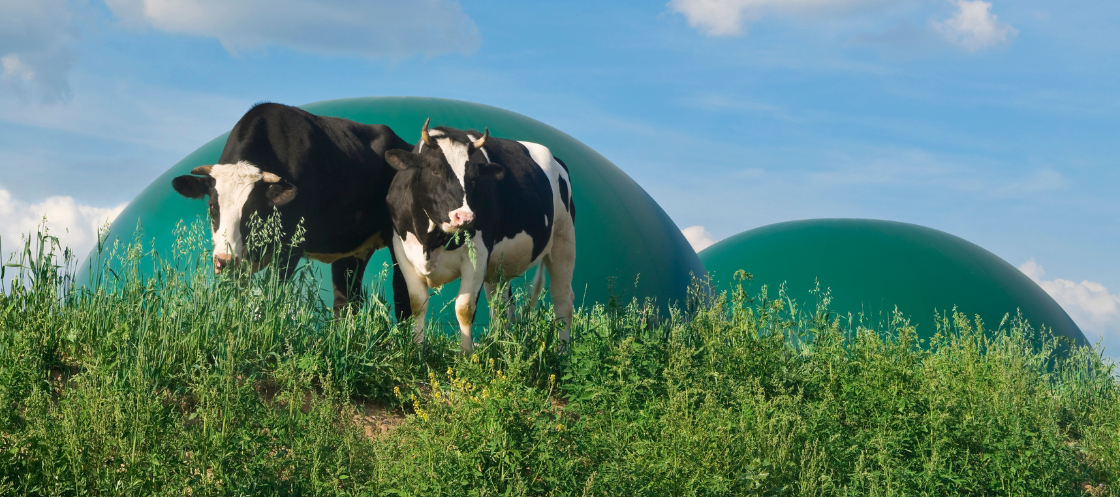
Biomethane begins with organic material. Biogas can be produced through processes including anaerobic digestion, in which microorganisms break down organic matter without oxygen. Once biogas is upgraded and purified to more than 95 per cent methane, the resulting biomethane has an energy density comparable with natural gas and can be suitable for injection into existing gas networks.
Potential Australian feedstocks identified in the consultation include crop residues, livestock manure, wastewater, food waste and other organic waste streams.
That creates a different development model from large electricity projects. Renewable gas production is likely to depend not only on energy infrastructure, but also on where suitable organic material is located, how it is collected and transported, and what competing uses already exist for it.
The consultation paper notes, for example, that agricultural residues can already have uses including animal feed and soil management.
A role where electrification is difficult
The policy process is not based on renewable gas replacing electrification.
DCCEEW says electrification and energy efficiency are expected to play a central role in reducing emissions from households and small businesses. The issue being examined is what happens in applications where electrification is difficult or cannot currently provide an alternative.
Gas remains an important input for industrial processes including glass and brick making and chemical production, where it can provide high-temperature heat or serve as a feedstock.
Renewable gases are therefore being considered as one potential way of reducing emissions from gas-reliant industries while allowing those processes to continue.
The consultation also asks whether particular hard-to-abate sectors should receive greater priority under a national policy.
NSW already has a biomethane scheme taking shape
The national discussion intersects directly with policy already being developed in NSW.
Under the NSW Renewable Fuel Scheme, renewable fuel producers can create certificates for each gigajoule of eligible renewable fuel they produce. Liable parties must acquire and surrender certificates to meet their share of scheme targets or pay a shortfall penalty.
The scheme was originally established to support green hydrogen, but the NSW Government intends to expand it to biomethane from 2028.
The planned biomethane and green hydrogen target would increase to 8 million gigajoules by 2038, with annual targets phased according to expected production.
NSW is also supporting physical production infrastructure. Its Renewable Gas Production Program is making $40 million available for commercial biomethane facilities and associated infrastructure.
Eligible projects under that program must use NSW feedstock, inject biomethane into the NSW gas network and supply industrial users in the state.
The national consultation paper specifically identifies the NSW Renewable Fuel Scheme among the existing frameworks that would need to be considered in developing a coordinated approach.
The economics remain a central problem
Being able to produce renewable gas does not necessarily mean it can compete commercially with natural gas.
The consultation paper cites modelling prepared for AEMO estimating that around 100 to 200 petajoules of biomethane production potential could be feasible in the east coast gas market by 2030 under the scenarios examined.
The modelling found landfill gas and waste products among the more economically recoverable feedstocks, with estimated production costs of about $10 to $27 per gigajoule. The consultation paper compares this with recent east coast contracted natural gas prices of around $13 to $15 per gigajoule.
Government is consequently asking industry what mechanisms could address the remaining cost gap, what customers may be prepared to pay for renewable gas and which project costs are most sensitive to government policy.
It is also considering whether an aspirational biomethane production target would be useful.
No national target has been proposed at this stage.
Existing pipelines could become part of the equation
Infrastructure is another part of the consultation.
Because upgraded biomethane has properties comparable with natural gas, it can potentially use existing gas infrastructure rather than requiring an entirely separate energy network.
That does not mean connection is straightforward. Renewable gas production can occur in regional locations close to agricultural and waste feedstocks, while Australia's gas networks were designed around gas moving from conventional production fields towards major demand centres.
The consultation is examining network connection costs, infrastructure access and whether changes such as compression equipment may be required to allow gas to move differently through existing networks.
It also asks whether current arrangements under the National Gas Law and National Gas Rules adequately accommodate emerging biomethane projects.
National policy still to be determined
The consultation does not establish a National Renewable Gas Policy or commit governments to a particular support mechanism.
Energy Ministers have instead asked officials to develop options for a national approach. Among the possible objectives being tested are energy security, emissions reduction, domestic industry development, regional employment and the competitiveness of gas-reliant industries.
The paper also raises choices about whether policy should concentrate initially on biomethane or cover a wider range of renewable gases, and how domestic supply should be weighed against potential export development.
Industry group Bioenergy Australia's Renewable Gas Alliance has welcomed the consultation and said it would prepare a submission with its members. The organisation has advocated for policy settings intended to support project development and investment and address the price difference between renewable and conventional gas.
Submissions can be made through the DCCEEW consultation portal until 25 September 2026. Feedback will contribute to advice and recommendations to Energy Ministers on a coordinated national approach.