Newcastle researchers develop new pathways for retired solar panels
University of Newcastle researchers and students have received $10,000 to develop a digital platform connecting retired solar panels with reuse and recovery opportunities, while investigating new building materials made from recovered glass.
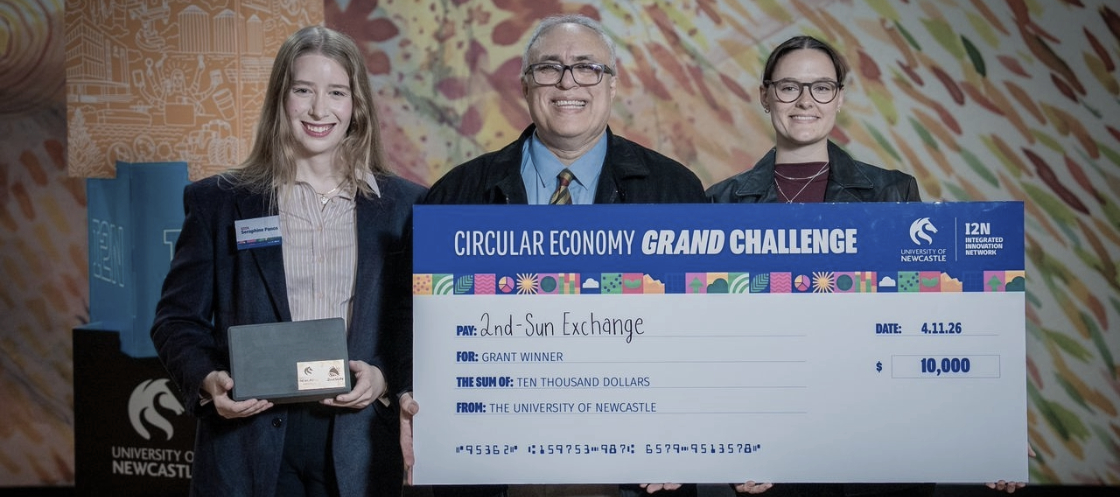
A University of Newcastle team is developing a digital platform to connect retired solar panels with opportunities for reuse, repair and material recovery, as NSW considers mandatory product stewardship requirements to manage growing volumes of solar-panel waste.
The project, 2nd-Sun Exchange, is one of three winners of the University's 2026 Circular Economy Grand Challenge, receiving $10,000 to support prototype development, industry partnerships and early-stage testing.
The proposed platform aims to connect solar-panel owners and installers with people and organisations able to reuse, refurbish, remanufacture or recover materials from panels removed from service.
The team is also exploring ways to transform recovered solar-panel glass into lightweight foam-glass building materials.
Connecting solar panels with their next use
In a project presentation published on YouYube by the Newcastle Institute for Energy and Resources (NIER) on 23 October 2026, the team reported consulting more than 50 people across the solar-panel lifecycle, including homeowners, installers, manufacturers and local government representatives.
According to the team, those consultations identified difficulties connecting people with retired solar panels to others who could reuse, refurbish or recover value from them.
2nd-Sun Exchange aims to address this through a digital matchmaking platform that helps identify potential pathways for panels at the end of their first use.
These pathways could include direct reuse, refurbishment, remanufacturing, material recovery or conversion into other products.
The team outlined plans to develop and validate a minimum viable digital platform and advance a prototype building material made from recovered solar-panel glass over six months.
In its October presentation, the team proposed allocating more than $8,000 towards developing the platform and advancing the glass-material prototype. The remaining funding would support industry engagement, user recruitment and promotional activities.
The project team comprises Laureate Professor Behdad Moghtaderi, Associate Professor David Shao and Dr Josephine Vaughan, alongside undergraduate students Seraphine Panos and Chloe Martin.
Professor Moghtaderi is the research team lead, while Panos and Martin are student co-leads.
The Circular Economy Grand Challenge is delivered through the University's Integrated Innovation Network (I2N). The 2026 competition offered three $10,000 grants for teams to develop and test waste-reduction ideas over six months, alongside three $2,000 prizes.
NSW solar-panel waste expected to increase
The project comes as NSW prepares for increasing volumes of solar-panel waste.
In September 2026, the NSW Government estimated that approximately 14,000 tonnes of solar-panel waste is generated across the state each year, with annual volumes projected to reach 89,000 tonnes by 2045.
NSW has more than 1.18 million rooftop solar systems across homes, businesses, schools and community facilities.
As existing systems age and panels are replaced, increasing quantities of equipment will require collection, reuse, recycling or disposal.
Solar panels contain recoverable materials including aluminium, glass, silicon, copper and silver, which can potentially be used in manufacturing and other industries.
NSW proposes mandatory product stewardship scheme
The NSW Government is consulting on the draft Product Lifecycle Responsibility Amendment (Photovoltaic Panels) Regulation 2026, which would establish mandatory product stewardship requirements for specified solar panels supplied in NSW.
The proposed scheme is intended to increase recycling and higher-value resource recovery while making suppliers responsible for managing their products throughout their lifecycle.
Under the draft regulation, the NSW Environment Protection Authority (EPA) could enter into a stewardship administration agreement with a product stewardship organisation (PSO) to administer the scheme.
Where such an agreement is in place, brand owners supplying regulated panels into NSW would be required to enter into an agreement with the PSO.
Where no stewardship administration agreement is in place for a particular type of regulated panel, brand owners would be required to meet the relevant product stewardship requirements directly.
The draft regulation includes provisions intended to prevent panels being disposed of through conventional waste streams, landfill or export, as far as reasonably practicable.
It also seeks to maximise panel reuse and the recovery of materials, particularly high-value and critical metals.
Proposed requirements include sufficient collection points across metropolitan and regional NSW, public information about safe disposal and recycling, and reporting on recovered materials and their subsequent uses.
The draft specifically addresses the development of recycling, remanufacturing and resource recovery capabilities within NSW.
Product stewardship organisations would be required to report on the quantity and quality of materials recovered from regulated panels and the industries receiving those materials, including construction, manufacturing, mining and energy.
These proposed arrangements relate to the opportunities being investigated by 2nd-Sun Exchange, particularly connecting retired panels with potential users and developing building products from recovered glass.
The draft regulation defines regulated photovoltaic panels as monocrystalline or bifacial panels. Portable panels, batteries and associated equipment are excluded.
The regulation remains in draft form and its requirements may change following consultation.
“NSW has embraced rooftop solar, and now we’re making sure those panels don’t become tomorrow’s landfill problem. Solar panels contain valuable materials that can be recovered and put back to work," NSW Environment Minister Penny Sharpe said.
“A mandatory product stewardship scheme can help build a circular economy for solar panels, while supporting new recycling and manufacturing opportunities here in NSW.”
Consultation closes 16 November
The NSW EPA is seeking feedback on the draft regulation, its regulatory impact statement and an issues paper examining opportunities for local solar-panel recycling, remanufacturing and manufacturing industries.
The consultation seeks input on technologies, investment, markets for recovered materials, workforce skills, industry collaboration and potential locations for recycling and advanced manufacturing facilities.
Industry, researchers, manufacturers, recyclers, local councils and community members can contribute through the EPA's online consultation or by emailing pvstewardshipengagement@epa.nsw.gov.au.
Submissions close at 5pm on Monday 16 November 2026.