NSW councils turn to science as solar farms expand across regional areas
Six regional NSW councils have partnered with University of Newcastle researchers to examine the scientific evidence around potential interactions between large-scale solar infrastructure and agricultural land as renewable energy development expands across the state.
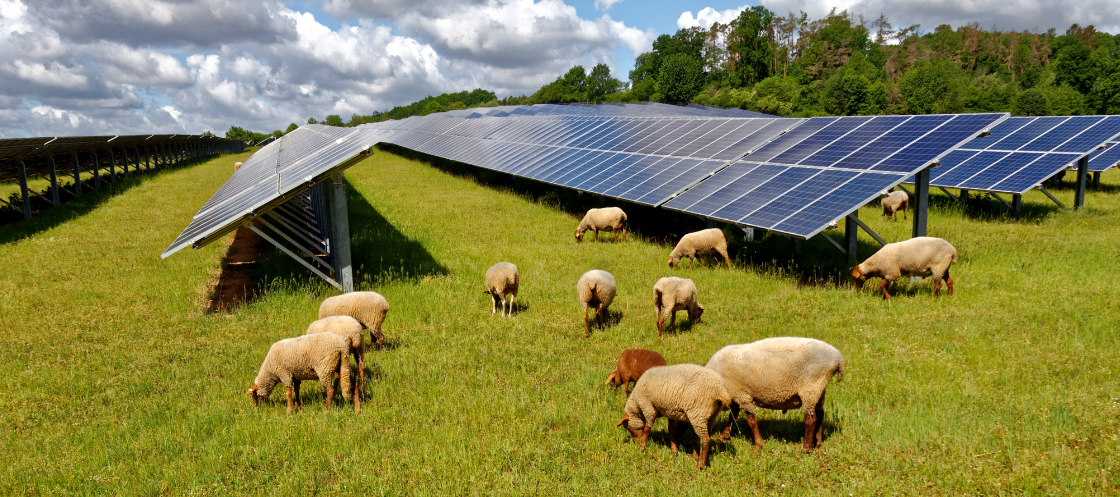
Questions being raised by regional communities about solar farms and farming land will be put under scientific scrutiny through a research project supported by the Trailblazer for Recycling and Clean Energy (TRaCE).
Researchers will work with Tamworth Regional Council, Muswellbrook Shire Council, Mid-Western Regional Council, Hay Shire Council, Dubbo Regional Council and Singleton Council to establish what existing research can reliably say about potential interactions between ground-mounted solar photovoltaic systems and their surrounding environment.
The first stage will independently review Australian and international scientific research, separating evidence-based findings from anecdotal claims and identifying questions that require further investigation.
Building an evidence base for councils
The project is being led by Dr Jessica Allen from the University of Newcastle's School of Engineering in collaboration with the School of Science.
Researchers will examine existing evidence about how solar panels and associated infrastructure could chemically interact with their surroundings, including the environmental conditions under which previous studies have been conducted.
In a statement announcing the project, TRaCE said concerns about possible soil impacts from solar panels and associated infrastructure had become more prominent through media coverage and community discussion.
Recent changes to Livestock Production Assurance requirements have also encouraged producers to consider infrastructure condition and end-of-life management as part of animal welfare practices.
The research will assess what is currently known, where evidence is lacking and which issues may warrant future applied research.
Solar development meets agricultural land
The work comes as large-scale solar development continues across regional NSW, including within the state's Renewable Energy Zones.
That growth can place renewable energy development alongside existing agricultural production, creating questions for councils and landholders about how the two land uses interact.
The project is intended to give the participating councils an independent evidence base that can be used in planning, policy development, stakeholder engagement and discussions with their communities.
TRaCE said the work would also help landholders better understand the potential opportunities and risks associated with renewable energy development alongside continued agricultural production.
Importantly, the project is not starting with assumptions that solar infrastructure is or is not causing soil contamination or other environmental impacts.
Instead, researchers will examine what existing scientific studies have established, the conditions under which those findings apply and where claims are not yet supported by sufficient evidence.
Six regions contribute to the research
The involvement of councils from different parts of NSW gives the project a broader regional scope.
Participating local government areas extend from the Hunter through the Central West and New England to the Riverina, bringing councils experiencing different patterns of renewable energy and agricultural development into the same research project.
The initial evidence review is also intended to lay the groundwork for possible future applied research where knowledge gaps are identified.
The project forms part of TRaCE's work with local government, which also includes research with regional communities navigating the rollout of Renewable Energy Zones across NSW.